Why Your Food Tastes Bland (And How to Fix It Fast)
A practical troubleshooting guide for flat food—how to use salt, acid, fat, and heat to bring dishes to life quickly with simple, kitchen-ready fixes.
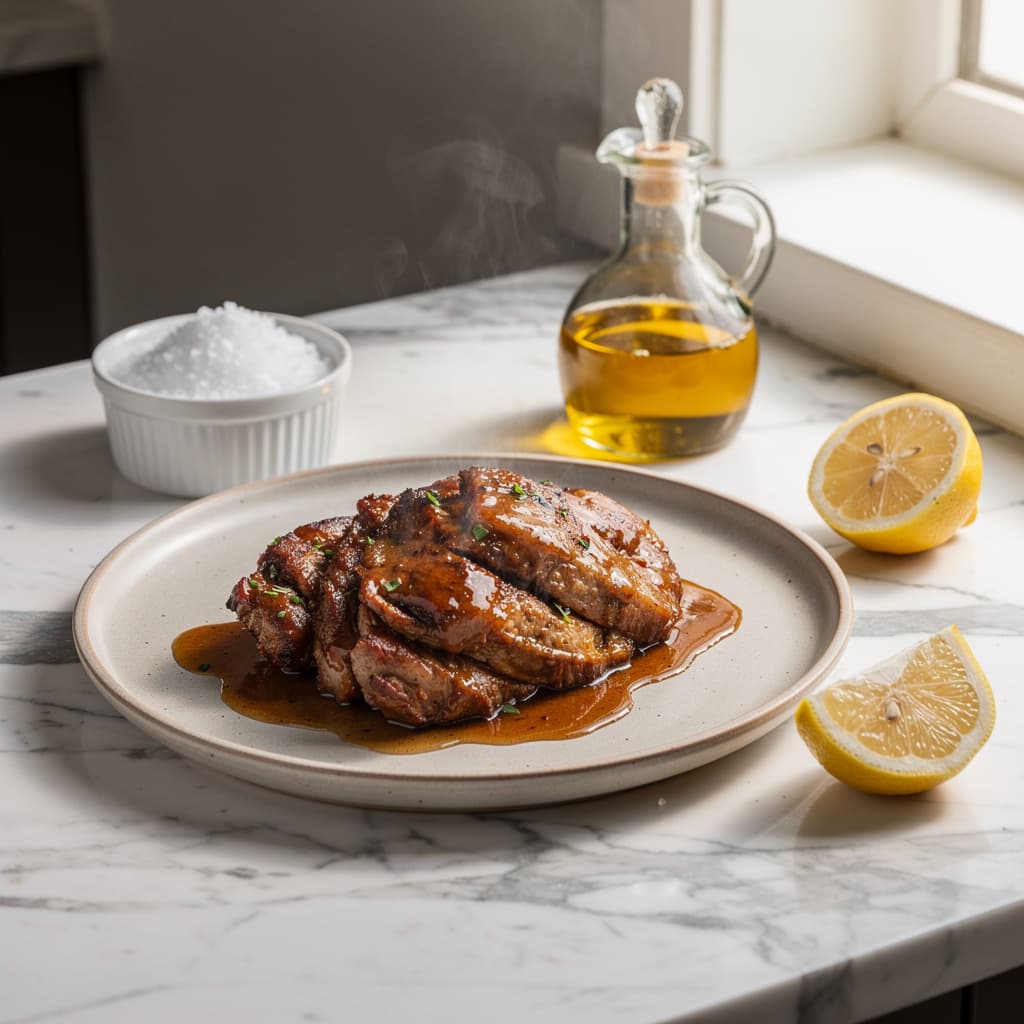
There’s a moment we all know: you take a bite, then squint and search for flavor. Bland food isn’t the kitchen’s fault so much as a missed set of levers—salt, acid, fat, and heat—that turn simple ingredients into something memorable. Once you understand how those four things work together, fixes become fast and intuitive instead of frantic.
Salt: season in layers, not all at once
Salt is the backbone of flavor. Think of it as the scaffolding that lets other tastes stand tall. A good habit is to salt in stages: a touch while cooking to build depth, and a small finishing pinch to sharpen the top notes. For proteins, a light salt the day or hour before (a dry brine) evens seasoning and helps browning; for vegetables and soups, salt while they cook so it dissolves into the dish. If a finished plate tastes flat, a dash of salt—taste after each addition—will often be the fastest rescue.
Brighten with acid: the small splash that changes everything
Acidity wakes dull flavors. Citrus juice, vinegars, even a spoon of yogurt can cut through richness and lift an entire dish. Use acid at the end of cooking: start with half the amount you think you need, taste, then add more. For vinaigrettes, aim for roughly 1 part acid to 2–3 parts oil as a starting frame. For pan sauces or stews, a teaspoon to a tablespoon of something bright (lemon, sherry vinegar, apple cider vinegar) can transform muted notes into vivid ones.
Fat: flavor carrier and mouthfeel fixer
Fat carries aroma and smooths sharp edges. If a stew or sauce seems thin or flat, finish with a knob of butter, a splash of good olive oil, or a spoon of cream to round flavors and add gloss. For a quick emulsion: off the heat, whisk in cold butter or a small amount of oil to thicken and bind flavors. Remember: fat doesn’t replace salt or acid; it amplifies them.
Heat control: brown for depth, gentle for clarity
Heat creates flavor through the Maillard reaction—that golden crust on meat or the nutty edge on vegetables. If something tastes one-dimensional, think about whether it ever browned. Sear on medium-high to high (pan should be hot and oil shimmering) and don’t overcrowd the pan. Conversely, delicate dishes benefit from gentle simmering so volatile aromatics aren’t cooked away.
Quick fixes you can try right now
- Taste, then add: salt (small pinches) → acid (a few drops) → fat (a little butter or oil). Taste between each.
- Boost umami: a splash of soy, a spoonful of miso, grated cheese, or a tiny anchovy.
- Heat tweak: finish under a hot broiler for 1–2 minutes or briefly re-sear components for caramelization.
Learning to rescue a flat dish is about practicing small, reversible adjustments and training your palate to notice balance. Taste early, taste often, and remember that cooking is a conversation with the food—one small correction at a time.