What “Medium Heat” Actually Means
A practical guide to decoding vague stovetop directions like “medium heat” using sensory cues, simple tests, and realistic anchors so you can cook with confidence.
Most recipes treat stove dials like a shared secret: set to medium and magic will happen. The problem is every range on a knob, every pan, and every burner behaves differently. “Medium heat” is less a single temperature and more a set of predictable behaviors and sensory cues you can learn to read.
Why “medium” is a guideline, not an instruction
Recipe writers use terms like low, medium, and high because they’re quick. But they assume you and they share the same equipment and expectations. A new electric coil, a tiny gas stove, or a heavy stainless pan will all translate the same setting into different surface temperatures. The goal is to focus on what the food and the pan do — sound, shimmer, smell — instead of the knob number.
The sensory anchors that mean “medium”
Think of medium heat as the place where things are lively but not frantic. Useful sensory cues:
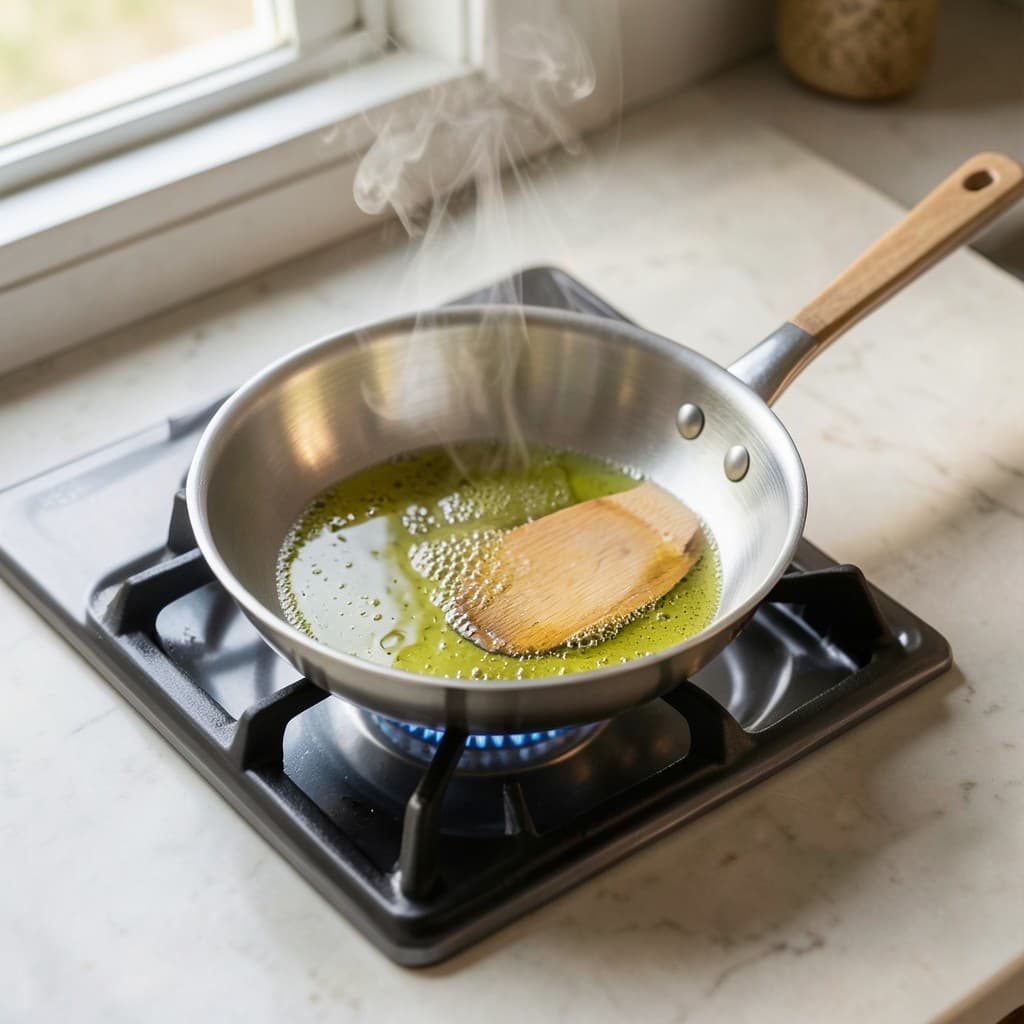
- Oil should shimmer and flow easily across the pan, not smoke or stand like a solid pool.
- A piece of bread crumb or a pinch of water sizzles steadily but doesn’t erupt into violent popping.
- Proteins form a golden surface after a minute or two, not a scorched crust in seconds.
These are repeatable indicators you can rely on regardless of brand of stove.
Practical numeric anchors (useful, not gospel)
If you like numbers, think of pan-surface temperatures approximately like this: low ~ 250–320°F, medium ~ 325–375°F, medium-high ~ 375–425°F, high >425°F. Those figures vary with pan thickness and burner efficiency, but they help explain why an egg wants a lower surface temp than a steak.
Three quick tests you can use to sense where you are:
- Oil shimmer test — heat oil until it fans out and glints.
- Water droplet test — a single bead should sizzle gently for medium and dance away for high.
- Breadcrumb or small piece of onion — it should take 60–90 seconds to color at medium.
How to translate common recipe language
- “Sauté over medium-high” = faster browning; expect more sizzle and shorter cooking time and don’t overcrowd the pan.
- “Simmer over medium” = small, gentle bubbles just breaking the surface; lower the flame if it becomes a rolling boil.
- “Cook on medium-low” = gentle, even heat for eggs, delicate fish, or reducing sauces.
When things go wrong and how to fix them
If the pan smokes, turn the heat down, remove the food briefly, and let the pan cool a bit before continuing. If there’s no sizzle, raise the heat and give the pan a minute to re-warm with the fat. Small corrections matter more than perfect settings.
Medium heat is a range of behavior, not a mystery setting. Watch the pan, listen, and learn the cues your stove gives you. With a few simple tests and close attention, you’ll stop guessing and start directing the outcome.