The Onion Guide Every Home Cook Should Read
A clear, practical guide to common onions—what they taste like, how they change with heat, and when to use each so your dish sings.
Onions are the kitchen’s quiet morphers: raw they bite, cooked they melt, and depending on the variety they’ll either sing bright or hum deep. Learning a few simple truths about how different onions behave is one of the fastest ways to improve almost any home-cooked meal — from a weeknight stir-fry to a slow-simmered stew.
Think of onions as flavor tools, not just ingredients
Every onion carries the same basic architecture: layers of cells full of flavor compounds and sugars. What changes between varieties is sugar level, water content, and the balance of sharp sulfurous compounds that make you tear up. Those differences are what determine whether an onion will crisp up and hold a bite, melt into a sauce, or sweeten and caramelize.
When you choose an onion, you’re choosing a behavior pattern: will it lend sweetness when cooked, keep brightness raw, or add a firm, savory backbone? Once you internalize those behaviors, you can think in terms of function rather than memorizing recipes.
Meet the common cast — and what they do in the pan
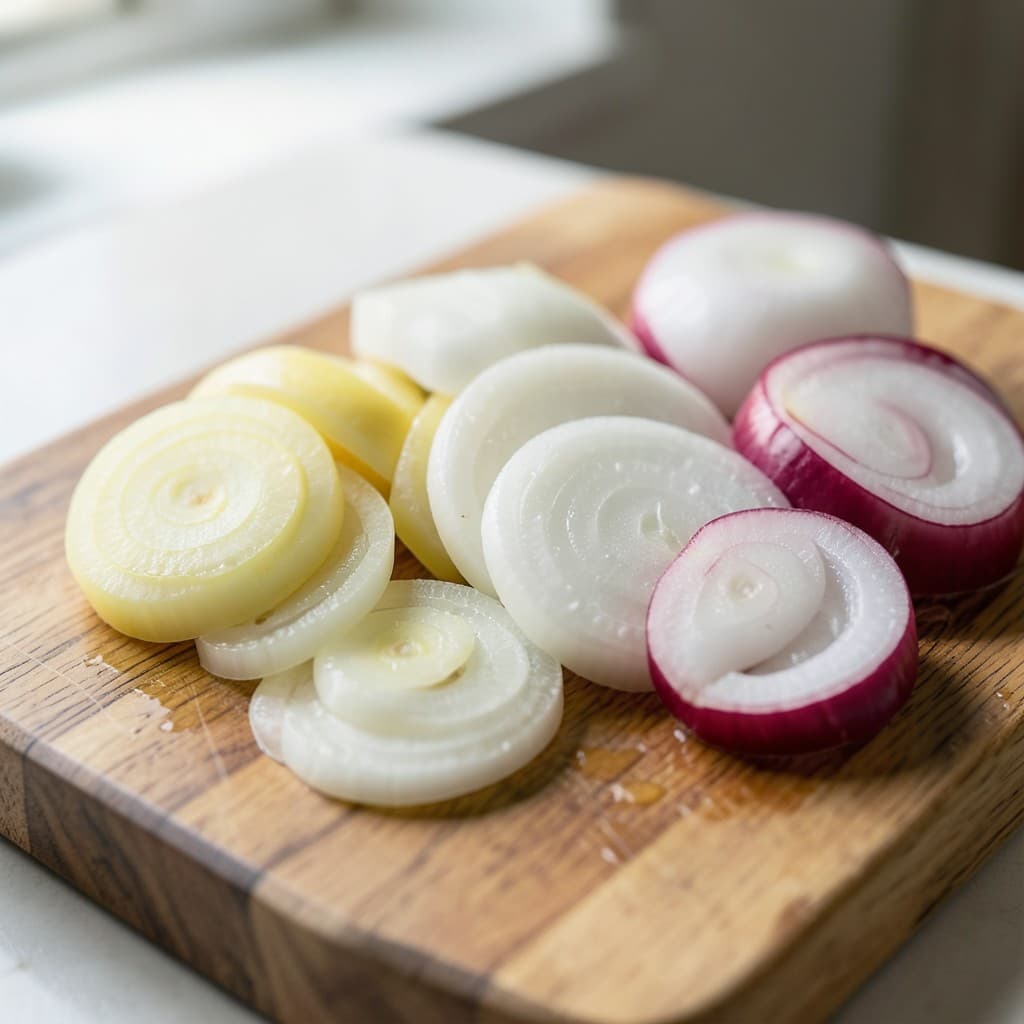
Yellow (brown) onion: The workhorse. Yellow onions have a balance of sulfur compounds and sugars. They stand up to long cooking and develop deep, savory sweetness when caramelized. Use them for soups, braises, stocks, and anywhere you want a rich, rounded onion flavor.
White onion: Cleaner and brighter. White onions are often crisper with a sharper raw bite and slightly less sugar than yellows. They’re great in salsas, quick stir-fries, and Mexican dishes where a sharper onion note is welcome.
Red onion: Color and punch. Raw red onion adds color and a spicy-sweet bite to salads and sandwiches. When cooked, the color fades and the flavor softens; lightly pickled red onion is another way to harness their brightness without raw harshness.
Sweet onions (Vidalia, Walla Walla, Maui): High sugar, low sulfur. These are built to be sweet when cooked and pleasantly mild raw. They excel in caramelizing, in onion tarts, and where you want sweetness without long cooking. They can get watery under high heat, so moderate temperatures suit them.
Shallots: Subtle and complex. Shallots are smaller, with a more delicate and slightly garlicky flavor. They dissolve into sauces and vinaigrettes, lending a nuanced onion background rather than a headline.
Green onions (scallions) and leeks: Freshness and body. Scallions are great raw or briefly cooked for a fresh onion lift. Leeks are mild, grassy, and retain texture in soups and gratins; they add volume and sweetness when softened slowly.
How onions change when you cook them — the science, in kitchen terms
Raw onion = sharp, pungent. Bite into a raw onion and you get sulfurous, volatile compounds that attack your eyes and palate. Chopping releases those compounds; acid and time mellow them.
Sweating/softening = mellowing without color. Cook an onion gently over medium-low heat until it’s translucent and soft. The volatile sharpness dissipates and gives way to a rounded, savory base. This is the stage for building stocks, sauces, and risottos where you want presence without assertive onion flavor.
Browning = complex savory notes. When the sugars and amino acids meet dry heat (and the pan isn’t so wet that they steam), Maillard reactions create toasty, umami-rich flavors and a golden color. Quick sauté over medium-high yields a golden edge in 5–10 minutes depending on thickness.
Caramelization = deep sweetness and gloss. Caramelization of onion sugars requires time and lower heat. Over 20–45 minutes on medium-low you’ll coax out a deep, jammy sweetness — perfect for topping burgers, folding into mashed potatoes, or building a sweet backbone for soups.
Charring/roasting = smoky depth. High dry heat (roasting at 400°F/200°C or a hot grill) will blacken edges and add smoky complexity. Use this when you want assertive, slightly bitter counterpoints to rich or fatty dishes.
Pickling/acid = brightness and preservation. Acid brines tame the sharpness quickly and add a crisp tang. Quick pickles are a reliable way to make pungent onions useful as a condiment.
Quick heuristics for choosing an onion
- Want something to melt into a sauce or soup? Choose yellow or shallot.
- Need raw crunch and color for salads or salsas? Reach for red or white.
- Craving sweet, jammy onion flavor with short cook time? Use sweet onions.
- Looking for bright finish or garnish? Use scallions.
Three essential buying tips: buy firm bulbs with dry skins, avoid soft spots, and store in a cool, dry, well-ventilated place (not the fridge for whole bulbs).
A few practical cooking levers to remember
- Temperature: higher heat gives quick browning and texture; lower heat encourages melting and sweetness.
- Time: caramelization is mostly patience. Expect 20–45 minutes on low to medium-low for rich, jammy results.
- Moisture control: don’t overcrowd the pan — too much steam prevents browning. Pat slices dry if you need them to crisp.
- Acid and salt: a splash of vinegar or lemon brightens cooked onion; salt early to draw moisture out when sweating, or late to preserve crunch.
Common mistakes and easy fixes
Overcrowding the pan so onions steam: Fix by working in batches or using a larger pan. You want contact with the hot surface for browning.
Cooking sweet onions at high heat and ending up with limp, watery pieces: Dial the heat back and give them time to reduce and concentrate, or start on medium-high and finish on medium-low.
Burning when you meant to caramelize: Lower the heat, add a small splash of water or stock to deglaze and scrape up brown bits, then continue slowly.
Relying on the same onion for every job: Different onions behave differently — using one variety across a menu often explains why some dishes feel flat or too sharp.
A short practice loop to build confidence
Pick one onion variety and one method: for example, a sweet onion and caramelization. Slice a single onion, use a medium-low pan, add a little fat and salt, and watch the progression: translucent -> pale gold -> rich brown and jammy. Note time and sensory cues (aroma turns sweet, texture becomes silky). Repeat with a yellow onion and compare the savory depth. Three mini experiments like this will teach you more than a dozen recipes.
Taste, adjust, repeat
Onions are forgiving and responsive. Taste at the sweating stage and again after browning; you’ll learn how much sweetness you like and whether a dish needs acid to lift it. Start thinking less about “the onion” and more about what role you want it to play in the dish — background, bright accent, or star performer.
Make a small habit of experimenting: roast a halved red onion with a drizzle of oil, caramelize a sweet onion slowly, or toss thin white rings into a citrusy salad. Each experiment sharpens your instincts.
At the end of the day, the best onion is the one that does what your dish needs: support, contrast, or spotlight. Let that simple intention guide your choice, and you’ll start noticing how much better everyday cooking can taste.