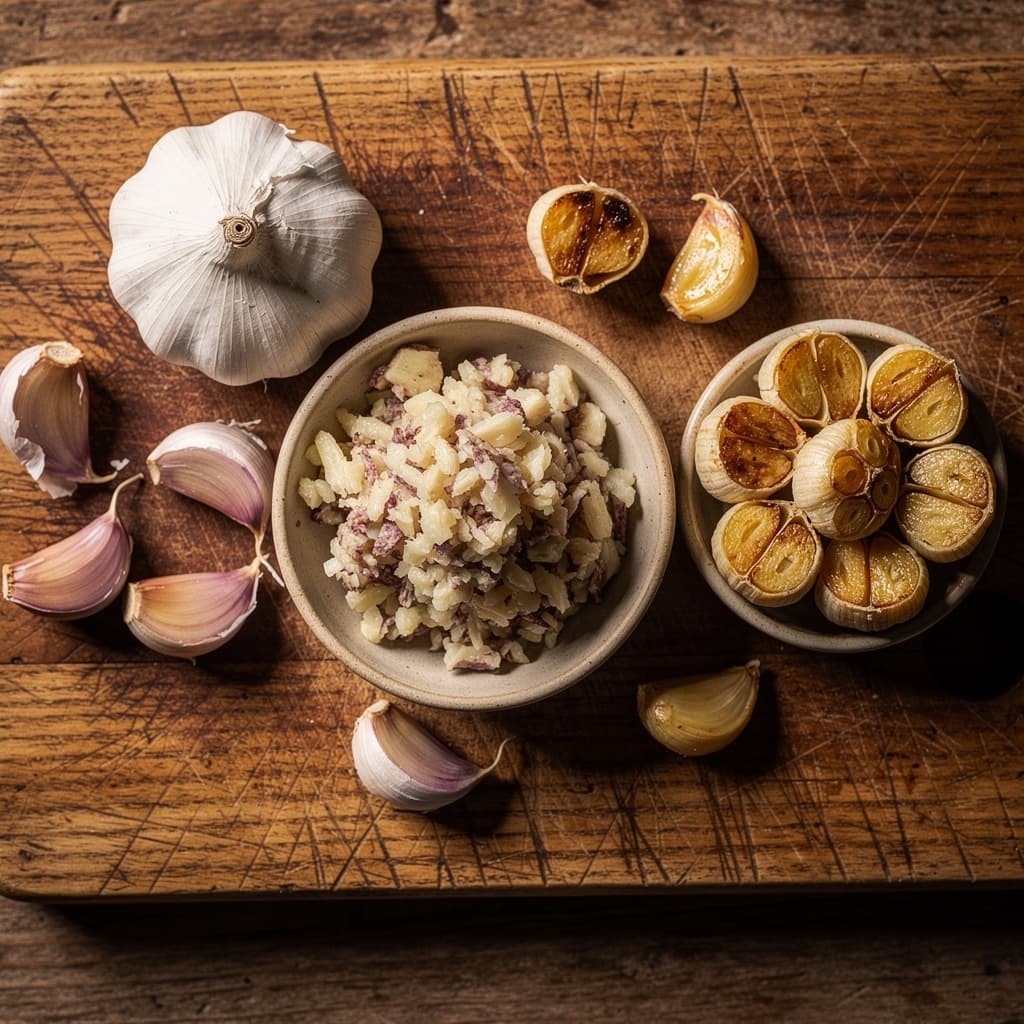
Garlic: Raw, Sautéed, or Roasted — What Actually Changes
A short guide to how garlic's pungency becomes sweet, nutty, or bitter depending on cut, heat, and timing—practical cues for when to add it and why.
Garlic is one of those ingredients that seems simple until you watch it change in the pan. A clove can bite like horseradish one moment, then melt into honeyed sweetness the next. The difference isn't magic; it's chemistry, cut size, and temperature. Knowing the levers gives you control instead of surprise.
From sharp and pungent to mellow and sweet
When you crush or mince garlic you make allicin, the compound that gives raw garlic its bright, sharp punch. That pungency is useful: it wakes up dressings, salsas, and uncooked sauces. But heat breaks allicin down into a suite of sulfur compounds that taste softer and eventually sweet or nutty as Maillard reactions and gentle caramelization take over.
- Raw: sharp, electrifying, slightly green. Think bright vinaigrettes, gremolatas, or a garlicky tzatziki.
- Sautéed: fragrant and savory. At the right moment it adds warmth without aggressiveness.
- Roasted/confit: soft, sweet, almost caramel; spreadable and deeply aromatic.
Why timing and cut size matter more than the clock
Cut size is a control knob. Finely minced garlic releases allicin quickly and so cooks (or burns) faster; whole cloves take longer to transform. Temperature is the other knob. A quick hit in hot oil releases aroma but can flip to bitter in seconds if you overshoot. Low-and-slow heat encourages breakdown toward sweet, mellow flavors.
A few practical anchors: sliced or whole cloves tolerate longer time and lower heat; minced or pressed garlic should be treated briefly at medium heat and watched closely. Burnt garlic is brown and scorched-tasting—once you see that deep brown, bitterness is already there.
When to add garlic — a home cook's rulebook
Think about the role you want garlic to play. Add raw when you want a sharp, fresh note: toss minced garlic into a lemon vinaigrette and let it rest 10–30 minutes before serving to soften slightly while keeping bite. Add garlic toward the end of a quick sauté for a fragrant, savory lift—think 30–60 seconds in pre-heated oil until fragrant. Start garlic with the fat over low heat when you want sweetness and silkiness, as in a confit or slow tomato sauce.
Three essential heuristics:
- If you want brightness: add raw or at the very end.
- If you want depth without bitterness: cook gently from the start.
- If you want sweet, spreadable garlic: roast or confit long and slow.
Tasting cues and quick fixes
Watch for a change from translucent to golden for pleasant sweetness; a shift from golden to dark brown signals bitterness. If a pan of garlic tastes off, drain and start again—the oil has taken on the burnt flavor. For balance, acid (lemon, vinegar) and salt help tame any lingering sharpness.
A small practice loop to build intuition
Try three small tests: a teaspoon of raw minced garlic in olive oil, a sliced clove sautéed gently for a few minutes, and a roasted half-head. Taste each on a plain piece of bread or a spoonful of yogurt. Note differences in sharpness, sweetness, and texture.
Cooking garlic is mostly about intentions. Decide whether you want a flash of heat, a warm underpinning, or something sweet and silky—and then choose your cut, your heat, and your timing. Taste as you go, and you’ll start to reach for the right garlic every time.