The Difference Between Simmering and Boiling (And Why It Matters)
A clear, sensory guide to tell simmering and boiling apart, why the difference changes texture in sauces, soups, pasta and proteins, and simple heat cues to use at home.
I remember my first pot of tomato sauce that I treated like a science experiment — a furious, forever rolling boil because I thought more heat meant faster flavor. Two hours later I had a thinner, broken sauce and a kitchen that smelled scorched. What I learned was simple: how you simmer or boil changes texture, clarity and flavor as surely as what you put into the pot.
How to see the difference: the visual language of heat
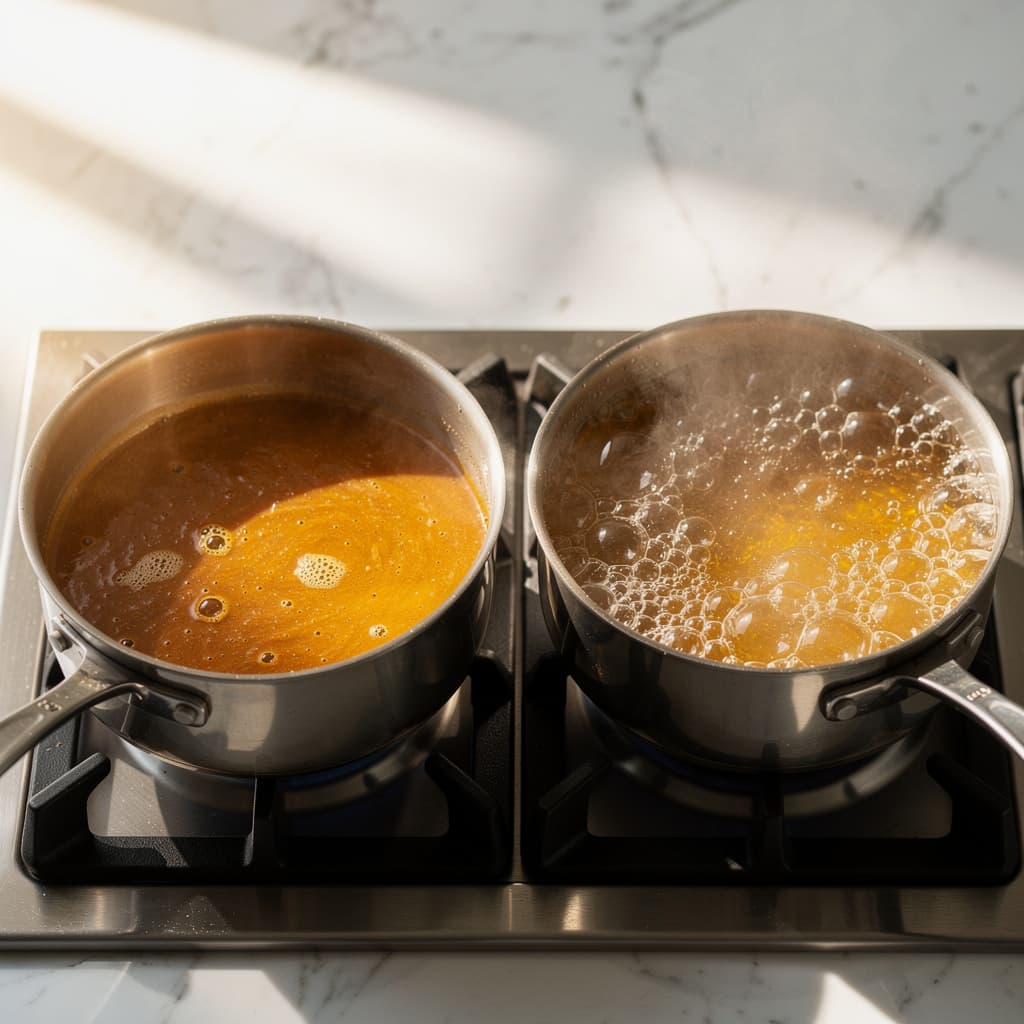
There are three visual stages to know: a gentle simmer, an active simmer, and a rolling boil. Each one signals a different amount of energy moving through the liquid.
- A gentle simmer shows tiny bubbles rising slowly from the bottom, breaking softly at the surface. The surface barely shivers.
- An active simmer has more frequent medium bubbles and a surface that ripples. Think steady, purposeful movement.
- A rolling boil is kinetic: large bubbles, vigorous churning, and a surface that can’t calm even if you turn the heat down a notch.
Those are the simple, immediate cues you can use without a thermometer. If you do use temperatures: simmering typically sits around 185–205°F (85–96°C); boiling is 212°F (100°C) at sea level.
What’s happening under the surface: bubbles, convection and chemistry
Bubbles are evidence of energy changing the water into steam. In a simmer, you get smaller, slower bubbles and milder convection currents. In a boil, convection is intense — liquid cycles rapidly from bottom to top. That difference matters because heat transfer controls how quickly proteins tighten, starches hydrate, and solids are pulled into the liquid.
A rolling boil agitates ingredients and forces dissolved solids (starch, proteins, tiny fat droplets) into the water. A simmer is gentler, allowing flavors to infuse and large particles to soften without being physically battered.
How simmering vs boiling changes texture — the practical view
Sauces
Sauces like tomato sauce or cream-based pan sauces are delicate. A gentle simmer allows water to evaporate steadily, concentrating flavors and thickening without breaking emulsions. A rolling boil, by contrast, can break an emulsion (the fat separating out) or cause dairy to curdle and scorch, leaving a grainy texture. When you’re reducing a sauce for richness and gloss, aim for a patient simmer rather than a furious boil.
Soups and stocks
For a clear stock or a refined soup, a low simmer is the key. Simmering encourages slow collagen breakdown (which becomes gelatin) and extracts flavors without emulsifying fat or clouding the liquid. Boiling agitates proteins and tissues, producing cloudy, greasy stock and sometimes a bitter edge from overextraction. If you want a clean, silky consommé or a glossy bone broth, keep it below a boil.
Pasta and grains
Pasta is one exception where a rolling boil is often helpful: the vigorous movement keeps noodles separate and helps starch wash off evenly, preventing gluey clumps. Grain cooking is more nuanced: most grains simmer after an initial bring-to-boil so water absorption is gentle. Boiling grains constantly tends to break them apart and make them gummy, while a steady simmer gives an al dente texture.
Proteins (meat, fish, eggs)
Proteins respond strongly to the intensity of heat. Rapid boiling can tighten muscle fibers quickly, squeezing out moisture and making lean cuts like chicken breast or fish firm and dry. A gentle simmer cooks protein more gently, giving connective tissue time to dissolve into gelatin and producing a tender result. For delicate proteins — think poached eggs or fish — maintain a barely-there simmer so the structure sets without becoming rubbery.
Simple heuristics to build intuition at the stove
- If you want clarity, tenderness and slow extraction (stocks, braises, soups): aim for a low to active simmer — visible but calm bubbles.
- If you want movement to prevent sticking or separate items (pasta, blanching): use a rolling boil.
- If you are reducing or finishing a sauce and want gloss and thickening: reduce at a gentle simmer rather than a full boil.
- If your protein is delicate, avoid a boil; for tough cuts being braised, a simmer over several hours is what breaks collagen into gelatin.
Stove and pan reality: practical tips for control
Gas and electric stoves behave differently. Gas gives faster response to adjustments; electric retains heat longer, so you may need to drop the setting further to reach a simmer. A heavy-bottomed pan evens heat and reduces hot spots; a shallow wide pan increases evaporation and will reduce faster. Using a lid traps steam and pushes the pot toward boiling; removing the lid encourages a simmer and faster reduction.
If your burner doesn’t have a low flame that holds a simmer, try these small fixes: move the pan slightly off center, lift it a hair with a heat diffuser, or lower the flame and nudge the pan size (a smaller pan on too-large burner will be harder to simmer). The goal is not perfect gear but consistent observation — watch the bubbles and respond.
A short practice loop to make this muscle memory
Try this at home without following a recipe: fill a pot with water and heat it. Watch and note three moments — the first tiny surface quiver, the steady small bubbles (gentle simmer), the loud churning (rolling boil). Practice moving the knob to achieve each stage and hold it for a minute. Repeat with a pan of tomato sauce and with a skillet of stock to see how textures and sounds change.
A final note on choice and taste
Choosing between simmer and boil is a decision about texture, clarity and flavor concentration, not just speed. A boil is useful and necessary — for pasta, for blanching, for bringing large volumes to temperature — but simmering is often the better long game for texture and depth.
Taste as you go, rely on the visible language of bubbles, and let the pot tell you what it needs. Once you feel the difference between a gentle simmer and a rolling boil, you’ll stop treating the stove like an on-off switch and start cooking with the subtlety your food deserves.